
A pain in the neck
If you get on a treatment plan early, you have a good chance to avoid surgery for neck pain
Key takeaways:
- Overuse, a traumatic event like a car accident and a pinched nerve are causes of neck pain.
- Most instances can be treated with physical therapy before the need for surgery arises.
- Prevention includes stretching, good posture, not pushing yourself when lifting and avoiding smoking. A diet high in protein, vitamins and calcium also helps.
You’ve probably referred to that pest in your life as a “pain in the neck.” It’s a joking phrase, but it carries real weight in the medical community.
Sohail Syed, MD, an OSF HealthCare neurosurgeon, sees people with neck pain often. He wants you to know: quick action can help prevent a lifetime of pain.
Causes and symptoms
Neck overuse is a common cause of neck pain, Dr. Syed says. The strain on the muscles typically leads to dull, achy pain.
“They were pulling on [an object]. They were rear-ended [in a vehicle], and their neck whipped forward. Even something as simple as sleeping in an awkward position,” Dr. Syed says about the causes of neck pain.
A pinched nerve can also be a culprit.
“The most common cause [of a pinched nerve] is arthritis. Over time, a disc [in your spine] dries out and starts to bulge. Arthritis builds up in the joints of the neck. That can start squeezing on the nerve,” Dr. Syed explains.
“Certain activities can increase the risk for all that,” he adds. “You do something that requires moving your neck a lot. You do a lot of strenuous work. That can cause things to happen a little bit faster. It can also happen if you’re sitting at a desk at an uncomfortable angle for prolonged periods.”
Pain from a pinched nerve can travel down your body and into your hand, for example.
Treatment
Regardless of the cause of your neck pain, Dr. Syed says a good physical therapy program – both in the doctor’s office and continued at home – can take care of many cases before surgery is discussed. He estimates only around 10% of his patients need surgery.
If it does get to surgery: “A lot depends on which nerves are pinched and where,” Dr. Syed says. “For some people, we go in from the back of the neck to free up the nerve. For some, we go in through the front of the neck. Some surgeries are fusion surgeries. Some are what we call motion sparing. Rather than taking the individual bones of the neck and turning them into one bone, we’re able to keep them free. That preserves [the person’s] motion.”





Prevention
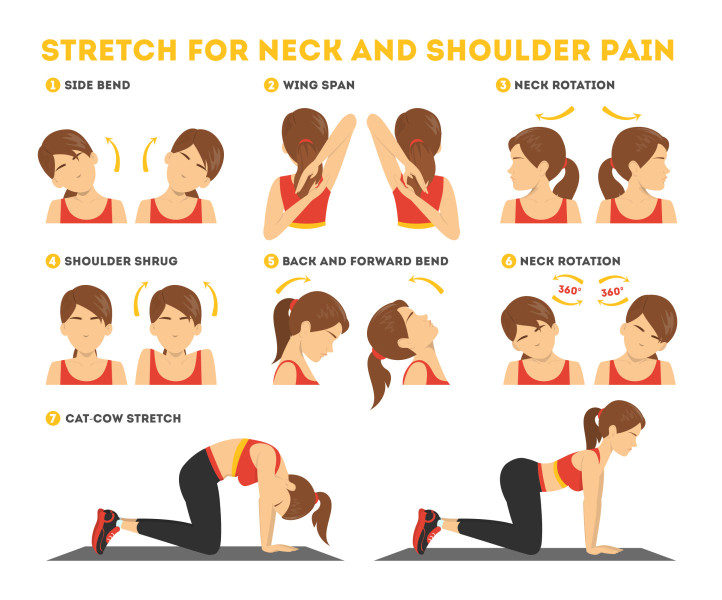
Here's an alert to put in your phone for morning, midday and evening: stretch. Stretching often can keep your neck limber. Five to 10 repetitions of up/down and side to side motions can go a long way, Dr. Syed says.
Practicing good posture goes hand-in-hand with stretching. Sit up straight at your work desk, and take breaks to walk around. Dr. Syed says research is still in progress on how much a standing desk or sitting on a big bouncy ball helps. But he says if those decrease your pain, go for it.
“If you work at a very physically involved job, make sure you have good ergonomics [good workplace behaviors]. If something is a two-person lift, grab someone. Don’t try to lift heavy things by yourself,” Dr. Syed implores.
A diet high in protein, vitamins and calcium is another must-do. Calcium helps prevent osteoporosis, a condition that weakens bones and makes them more prone to breaking.
And lastly, manage chronic illnesses, and drop the cigarettes.
“We know from a lot of studies that smoking damages bone metabolism. It accelerates arthritis. It’s bad for blood supply and nerves,” Dr. Syed warns.
Learn more
Read more about how to keep your body in top shape on the OSF HealthCare website.