
Adult vaccines you might be forgetting
And when you need them
Key Takeaways:
- Flu, COVID-19, tetanus and other vaccines are highly recommended as part of routine preventive care for adults.
- Vaccines such as shingles, HPV, pneumonia and RSV may be recommended based on age, pregnancy, or health conditions.
- Medical providers can check medical records, use certain blood tests, or recommend catch-up vaccinations when needed.
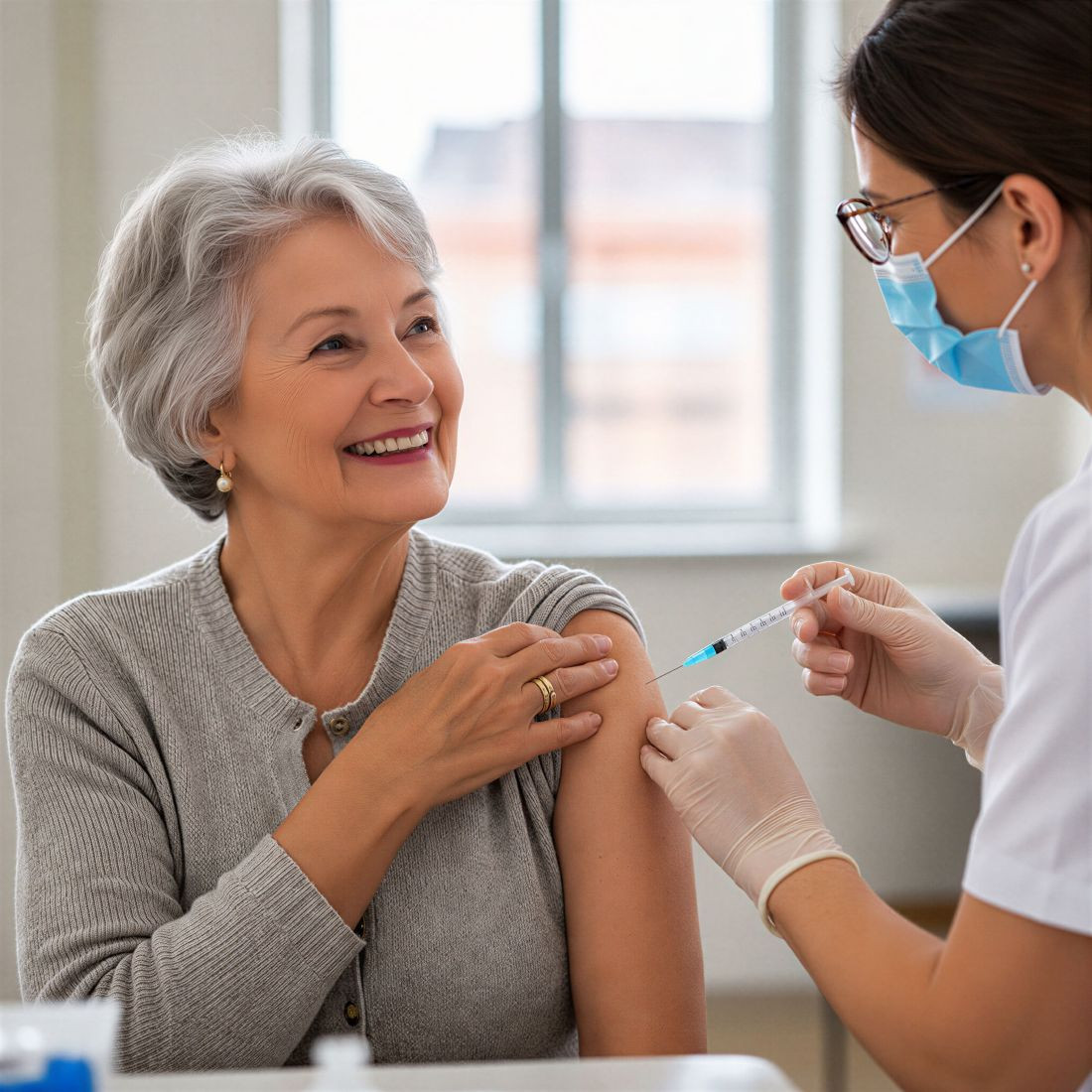
Vaccines are something many people associate with childhood: a series of shots following a schedule that gradually becomes less demanding. But adulthood comes with its own list of recommended immunizations, and keeping track of them can be surprisingly difficult.
That is why doctors often use annual physicals and preventive visits to review a person’s vaccination history and determine what vaccines are due.
Vaccine schedules can be pretty confusing. Talha Khan, MD, a family medicine physician for OSF HealthCare, says one way to simplify them is to think about vaccines in two groups.
“The first part is vaccines that are due for all age groups. So, things like the flu shot, the tetanus vaccine or the COVID-19 booster. The second part involves vaccines that are triggered by certain age requirements. So, things like the shingles vaccine, which is after age 50, or the pneumonia or pneumococcal vaccine, which is typically after age 65."
Dr. Khan says The Centers for Disease Control and Prevention's (CDC’s) adult schedule also recommends considering a patient's age, health conditions, pregnancy status, occupation and vaccination history when determining which vaccines are appropriate.
“Depending on if you have a weakened immune system or if you have a bunch of chronic conditions, such as asthma, COPD or diabetes, you may be eligible to get certain vaccines earlier.”
Can’t remember which vaccines you have received? Don't assume you are out of options.
Doctors can search existing medical records or request records from previous providers. For some diseases, blood tests known as antibody titers can help determine whether a person has immunity. When documentation is unavailable and no reliable test can establish immunity, clinicians may recommend catch-up vaccination rather than leaving someone unprotected.
"Most vaccines don't have an age cutoff," Dr. Khan points out. "If you ever didn't finish a vaccine series or missed a dose here and there, then we can always do some catch-up vaccines to make sure that person is immune.”
Here is a look at several vaccines adults may need to think about.
Flu: More than just a bad cold
Influenza vaccination is recommended every year because the viruses circulating from one flu season to another change, and protection decreases over time. The CDC recommends annual influenza vaccination for adults, with certain formulations preferred for people 65 and older.
Dr. Khan emphasizes that a flu shot does not guarantee that someone will never become infected.
“And some people will also mention ‘I got the flu vaccine but then I got the flu later on.’” Dr. Khan says, “It’s still possible to catch the flu because there are different strains of the flu. But typically, the extra layer of protection the vaccine offers will ensure you have a milder case of the flu.”
Another common misconception is that experiencing aches, fatigue or a low-grade fever after vaccination means someone has caught the flu from the shot. Those reactions can occur as a side-effect after vaccination and generally resolve within a few days.
COVID-19: Still part of vaccine conversation
COVID-19 may no longer dominate daily life the way it did years ago in the pandemic, but the virus continues to circulate, and vaccination remains part of the adult immunization schedule.
Current CDC guidance calls for COVID-19 vaccination according to age and health status, with recommendations subject to change as the vaccine formulation and public-health guidance are updated.
For people receiving both influenza and COVID-19 vaccines, getting them during the same visit is an option. CDC guidance permits multiple vaccines to be administered during the same visit, and Dr. Khan suggests combining the appointments can be a practical way to avoid putting off one of the vaccines.
The goal is to enter respiratory illness season with protection against both viruses rather than treating vaccination as something to get around only after illness begins circulating.
Shingles: Two doses to help prevent a painful infection
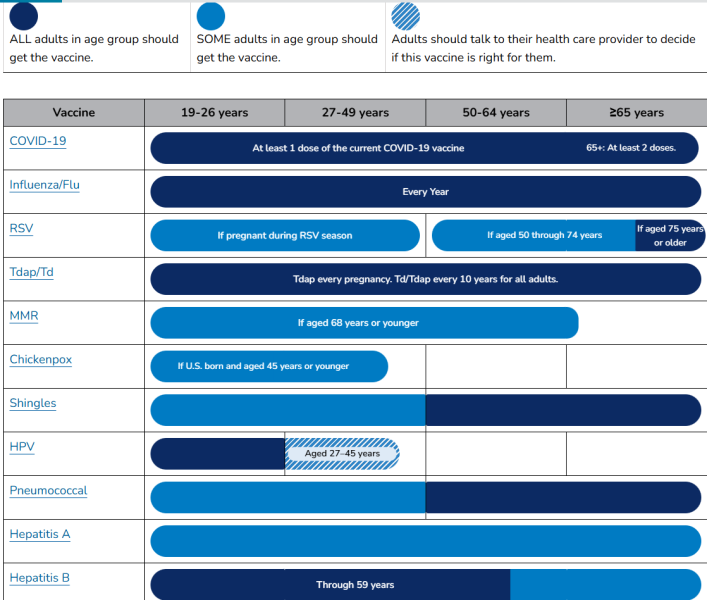 For most adults, the shingles vaccine becomes an important consideration at age 50. The recombinant zoster vaccine, commonly known by the brand name Shingrix, is administered as a two-dose series. It is also recommended for certain adults with weakened immune systems at younger ages. It is also a vaccination that once you’ve received the shots, you have immunity for life.
Shingles occurs when the virus that causes chickenpox, which remains dormant in the body after the initial infection, becomes reactivated. It can cause a painful rash and nerve pain that may persist after the rash disappears.
The illness can also affect areas such as the eye, where complications can be particularly affected. Dr. Khan describes the choice as a tradeoff between a temporary inconvenience and the possibility of a painful infection.
HPV: A vaccine that helps prevent cancer
The human papillomavirus, or HPV, is commonly associated with sexual transmission, but the reason doctors recommend vaccination well before most people become sexually active is cancer prevention.
HPV infection can cause several types of cancer, including cervical, anal, penile and certain cancers of the mouth and throat. The CDC routinely recommends HPV vaccination through age 26 for people who were not adequately vaccinated earlier; adults ages 27 through 45 might also consider vaccination based on a discussion with a health care professional.
The vaccine can be started as early as age nine. When vaccination begins before the 15th birthday, the routine series generally requires two doses; people who begin later generally need three.
MMR: Don't assume childhood records are complete
The MMR vaccine protects against measles, mumps and rubella. Because the vaccine is routinely administered in childhood, adults may not remember whether they received the recommended doses.
For people without documentation of vaccination or evidence of immunity, clinicians can review medical records or, in appropriate circumstances, order antibody testing to look for evidence of immunity. Measles is a serious, highly contagious disease caused by a virus. The virus is spread easily through the air when an infected person coughs, sneezes, or by direct contact with infected nose or throat secretions.
Illinois has 22 documented cases, and Michigan has 16 cases for 2026 at publication time. Dr. Khan highly encourages adults who are unsure of their vaccination status to check and get vaccinated.
“It’s definitely something that is preventable. It’s definitely something that can have long-term complications and even lead to death. If we can prevent it, then why not?” Dr. Khan stresses, “It’s only a two-dose series. If you missed it when you were younger, there’s no age cutoff. You can get it as an adult with the catch-up vaccines.”
Tetanus: The vaccine adults commonly forget
The tetanus vaccine is one of the easiest adult vaccines to overlook because it is not administered every year.
Adults generally receive a Tdap dose if they have not previously received one as an adult, followed by Td or Tdap boosters every 10 years. Tetanus vaccination can also become relevant when someone has certain wounds, and Tdap is recommended during each pregnancy.
RSV: Important for infants and older adults
Respiratory syncytial virus, or RSV, can cause mild illness in many people but can become serious in infants and older adults. CDC guidance identifies RSV as a major cause of hospitalization among infants and recommends immunization strategies for infants, pregnant women and for adults 75 and older and for adults ages 50 through 74 who are at increased risk of severe RSV. People who have already received an RSV vaccine generally should not receive another dose at this time.
For babies, the terminology can be confusing because the protection may come either from a maternal vaccine or from an antibody administered directly to the infant. CDC recommends that most babies receive one of those two forms of protection, rather than both.
Pregnant women can receive Pfizer's RSV vaccine during weeks 32 through 36 of pregnancy during the recommended seasonal window in most of the continental United States. Alternatively, an eligible infant can receive a long-acting RSV antibody after birth.
For infants born during the RSV season, the CDC says the antibody can be administered during the baby's first week of life, ideally during the birth hospitalization, when indicated.
Hepatitis A and B: Two different vaccines
Hepatitis A and hepatitis B are viral infections that affect the liver, but vaccination recommendations for the two are different.
Hepatitis A vaccination is generally targeted toward people with particular risk factors, including certain travelers and others at increased risk of infection. Hepatitis B vaccination is much more broadly recommended. It is routinely given during childhood, but adults who were not vaccinated or did not complete the series can receive catch-up vaccination.
Hepatitis B can sometimes be cleared by the body's immune system, but chronic infection can cause serious liver disease.
For adults unsure whether they received hepatitis B vaccination, reviewing records is a good starting point. Depending on the circumstances, blood testing can also help determine whether you are protected or not.
A preventive visit or annual exam can be an opportunity to plan, identify which vaccines are most appropriate and schedule additional doses when necessary. For adults, staying protected is an ongoing part of preventive health care.
Dr. Talha Khan is a family medicine physician for OSF HealthCare in Bloomington, Illinois.