
Life after stroke
Key Takeaways:
- Rockford, Illinois resident Deanne Meseck suffered a stroke in 2019.
- Ischemic strokes caused by a blocked vessel account for 87% of all strokes.
- No longer able to work, Meseck now volunteers to coordinate a local walk to raise awareness and funds.
- Call 9-1-1 immediately if you or someone you're with has symptoms of a stroke.
Rockford woman gives others hope through annual walk
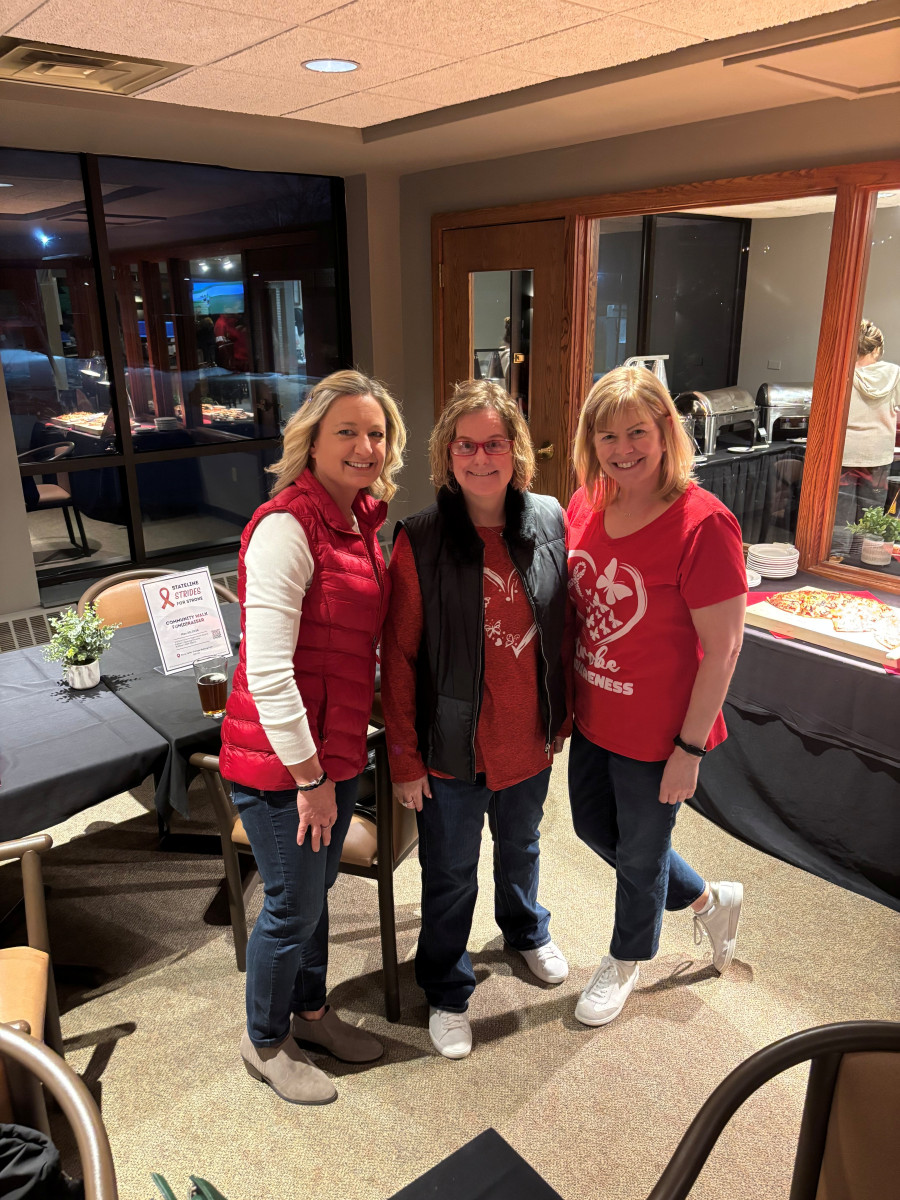
On a cold winter night in December 2019, Deanne Meseck of Rockford, Illinois, couldn’t wait to dig into her store-bought meal of roasted chicken, gravy and mashed potatoes. She had just completed a colonoscopy earlier that day and was famished.
But as she and her husband, Ryan, started eating, her life at age 47 changed forever.
Ryan noticed food was dropping from the left side of her mouth. Concerned, he told his wife to put her arms up, but Meseck couldn’t lift her left arm. And when he asked her to speak, her words were jumbled, so he immediately called 9-1-1. A crew arrived and suspected Meseck was having a stroke.
Meseck was taken by ambulance to OSF HealthCare Saint Anthony Medical Center in Rockford, where she underwent a battery of tests and procedures. The diagnosis came back as an ischemic stroke from a blood clot.
Ischemic strokes, caused by a blocked vessel, account for about 87% of all strokes, and roughly 60% of strokes among people under 50.
Michele Johnson, APRN, is a nurse practitioner at OSF HealthCare, and Meseck’s primary care provider. Johnson says Meseck had a large-sized right middle cerebral artery stroke, that affected half of her brain.
“Anytime somebody goes in for a stroke, you have to look at what type of stroke,” says Johnson. “What was it caused from? Was it from a blood clot? Is it a bleed? Just trying to figure those things out initially, in the emergency room and in the hospital.”
Meseck required surgery to relieve the swelling in her brain. She suffered respiratory depression from pneumonia, which required being on a vent for an extended period. After spending weeks in the hospital, Meseck was moved to a rehabilitation facility, followed by extensive physical, speech, occupational and ophthalmological treatment, some of which is ongoing.
Turning a corner
Johnson says despite tremendous progress, Meseck will always have some limitations.
“With the contractures (stiffness) of the hands, going back to therapy is important, some speech impediment, some visual problems and the weakness, she has progressed significantly since this all occurred,” Johnson says. “But there will always be some permanent disability.”
Perhaps the hardest part for Meseck was giving up her 26-year career in finance. “They were just really worried about what being in a stressful work environment would do,” says Meseck. "There was no way that I could hold a nine-to-five job.”
While the physical toll was hard on Meseck, the mental hurdles proved equally challenging. She sought mental health therapy, which gave her a new perspective while coping with severe depression.
“I spent a lot of time with a therapist talking about how I lost my identity, and I lost my whole way of life and had to figure out how to be a new person,” she says. “That was probably as difficult as any physical therapy that I had.”
Meseck filled her days by walking her dog, streaming TV shows and enjoying time with her two-year-old grandchild. But as she worked to heal both inside and out, Meseck, now 53, was searching for an opportunity where she could make a difference, especially for people going through similar challenges.
Giving back
She started attending a local, monthly group for stroke survivors. In 2024, the organizers of the group planned a benefit walk, and Meseck was on board, recruiting friends and family to form a team. But when she found out there wouldn’t be a second walk the next year due to a lack of volunteers, Meseck knew what she needed to do. She and her sister, Shelly, rolled up their sleeves and started planning the second annual walk, which takes place on May 30 in Rockford. Proceeds from the event support a stroke camp for survivors.
Meseck says coordinating this major special event is her new calling.
“I want to motivate people to know that there is life after stroke,” she says. “It may be hard to find it, and you won't be the same as you were, but you can do it. If I can do it, anybody can do it.”
Johnson says the timing is right for Meseck to take on her latest challenge of planning the walk.
“It is good for her to have a purpose because she was so busy before,” says Johnson. “This does give her joy. It’s important to hear from somebody like Deanne; there are treatments out there and you can live and function. Maybe not the way you did before, but there is life after stroke.”
Meseck says her journey is far from over. She knows that she will always be in constant recovery. And she can live with that.
“It was difficult,” she says. “But I just kept waking up every day saying, 'You know what, I'm here, and there's a reason I'm here.' You have to find a silver lining.”
When to seek emergency help
Call 9-1-1 or your local emergency number right away if you or someone you're with has signs or symptoms of a stroke.
Use F.A.S.T. to remember warning signs.
- Face. Does the face droop on one side when the person tries to smile?
- Arms. Is one arm lower when the person tries to raise both arms? Is one arm weak or numb?
- Speech. Can the person repeat a simple sentence? Is speech slurred or hard to understand?
- Time. Every minute counts during a stroke. Call 9-1-1 or your local emergency number right away if you see any of these signs.