
Woman battling Stage 4 cancer gets access to revolutionary drug
Thanks to OSF team
Told she had just six months to live following a Stage 4 lung cancer diagnosis, Joy Amundson was running out of options.
For nearly 12 years, the 53-year-old Peoria, Illinois native had endured cancer spreading throughout her body and six different treatment approaches, including surgery, chemotherapy and immunotherapy. A massive tumor in her liver had grown to more than 10 centimeters (roughly the size of a bar of soap), compressing her stomach and making it difficult to eat. Cancer had also spread to other areas, including her right breast.
Then, a biomarker in Amundson's cancer helped unlock an entirely new possibility.
A team at OSF HealthCare Cancer Institute in Peoria found a potential treatment that had never been approved for Amundson's specific disease. Getting it to her would require special permission from the U.S. Food and Drug Administration (FDA).
OSF secured that access in just two days.
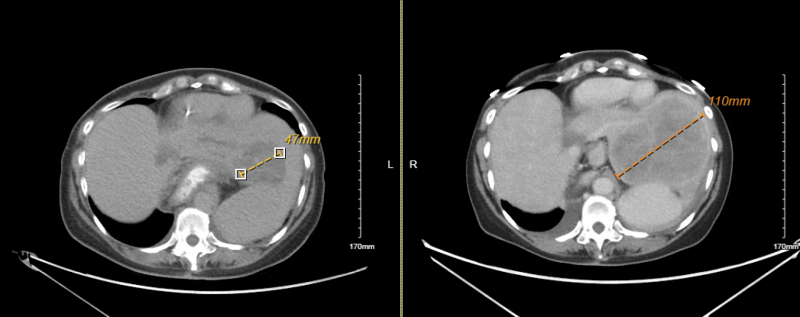
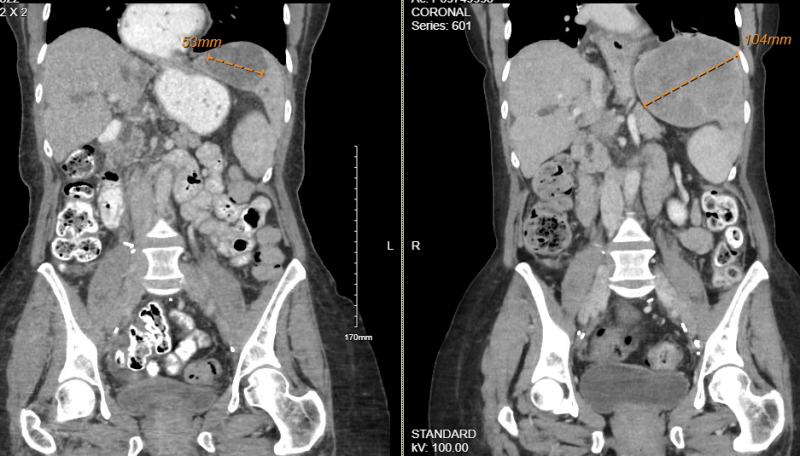
Less than six weeks after Amundson began treatment, the tumor in her liver had shrunk by more than half its size.
For a woman who had been told she might have only months left, it meant something much bigger than numbers on a scan.
It meant hope.
"Dr. [Jun] Zhang has given me so much hope. I am Stage 4 and was running out of options. I wasn't sure what to do," Amundson says. "I found Dr. Zhang, and he told me about some clinical trials and a medication that could help shrink the tumors, and [the tumors] had an overwhelmingly positive response [to treatment]."
Jun Zhang, MD, PhD, is vice president of oncology research at the OSF HealthCare Cancer Institute
A 12-year cancer journey
Amundson's cancer journey began in late 2014. While undergoing surgery on her ovaries, doctors discovered cancer. Two weeks later, doctors also found cancer in her right lung, which was ultimately identified as the primary source of her metastatic disease.
Within a month, Amundson underwent a right middle lobectomy, which required removing part of her right lung, and then began chemotherapy.
Amundson, a nurse practitioner with training in thoracic surgery, eventually moved to California.
Then she began falling while hiking.
Further testing revealed the cancer had returned and spread. Over time, disease was found in areas including her sciatic nerve, right breast and liver.
Amundson underwent multiple biopsies as the cancer progressed. One measurement doctors examined was Ki-67, a marker used to assess how quickly tumor cells are multiplying.
"For Joy, she got multiple biopsies because of the disease progression. The range was between 10-20%, and the last biopsy in the breast lesion was 40%, that's why we call it atypical carcinoid/high-grade neuroendocrine tumor," Dr. Zhang explains.
After six different treatment approaches failed to control the disease, Amundson needed another option.
By then, she had moved back to her hometown of Peoria to be closer to family. It was there that a conversation with her parents would help point her toward a new possibility.
Finding an answer in Peoria
Amundson was born and raised in Peoria – and was born at OSF HealthCare Saint Francis Medical Center, the same campus on which the OSF Cancer Institute is located.
Her parents encouraged her to seek care there, where she met Dr. Zhang. The two quickly found common ground. Amundson's background as a nurse practitioner included training in thoracic surgery, one of Dr. Zhang's areas of expertise.
With Amundson running out of conventional treatment options, Dr. Zhang and his team began looking deeper into the biology of her cancer for another possibility.
"Looking for some specific biomarkers and seeing if we can find a drug targeting those biomarkers," Dr. Zhang points out. "That biomarker is called DLL3. In her case, it came back positive. I was actually excited about that because there is a drug called tarlatamab used in small-cell lung cancer, and it has given us revolutionary results."
Delta-like ligand 3 (DLL3) is a protein found on the surface of certain cancer cells, including small-cell lung cancer cells.
Tarlatamab is a type of immunotherapy that helps the body's immune system fight cancer. It works by attaching to DLL3 on cancer cells and CD3 on immune cells called T cells. This brings the two cells together, allowing the immune system to attack the cancer cells.
The finding gave Dr. Zhang a potential target – and a potential treatment.
FDA approval in two days
Dr. Zhang and the clinical research team at the OSF Cancer Institute Breakthrough Treatment Center submitted a request through the FDA's Expanded Access program, which can allow someone with a serious or immediately life-threatening disease to receive an investigational therapy outside of a clinical trial when certain criteria are met.
In Amundson's case, OSF pursued single-patient expanded access for tarlatamab with support from the drug's manufacturer. They received approval in two days.
Amundson received her first doses at OSF Saint Francis, where she could be closely monitored. As treatment continued and she tolerated the drug, later treatments took place as outpatient appointments at OSF Cancer Institute.
Then came the scan.
"The fourth dose we did in an outpatient setting. And guess what? She's able to tolerate the treatment so well, and we just got a scan done [at less than six weeks], and when we opened the scans, everyone was shocked and extremely excited," Dr. Zhang says. "The tumor in the liver that was about 10 centimeters, has now shrunk to between four to five centimeters – over a 50% reduction."
The change wasn't confined to an image on a screen.
Amundson could feel it.
"My symptoms have improved dramatically. I don't have nearly as much pain. I was having trouble eating before and a lot of abdominal pain with that, which is now gone," Amundson says. "That's dramatically improved my quality of life."
Her pain has decreased, reducing her need for medication. Eating has also become easier.
For Amundson, who struggled to tolerate chemotherapy, the treatment has also meant avoiding some of the side effects she previously experienced.
Treatment will continue every other week as long as her cancer continues responding and she is able to tolerate the medication.
More time
For Dr. Zhang, Amundson's case illustrates how rapidly cancer treatment is evolving.
New therapies and an expanding understanding of tumor biomarkers are increasingly giving cancer teams opportunities to look beyond where a cancer originated and investigate the specific circumstances that may make an individual tumor vulnerable to treatment.
For Amundson, however, the science ultimately comes down to something much simpler.
Time.
"I hope to have more years with my family; my kids, my friends and my husband. That's my main goal: to be as healthy as I can be, not take it for granted and live every day like it's my last," Amundson says. "I was told I had six months to live before I saw Dr. Zhang. He said, 'Oh, I think I have something for you.' He's been a blessing, and I'm very privileged to see him."
Learn more about OSF HealthCare Cancer Institute at osfhealthcare.org/cancer.
Learn more about the exciting work of the OSF Breakthrough Treatment Center at breakthrough.osfhealthcare.org.