
Caring for the caregivers
How hospice offers comfort beyond the patient
Key Takeaways:
- Hospice can offer support to both the patient and loved ones during end-of-life situations.
- Mercedes Woodworth and her family benefitted from OSF Hospice for nearly a year.
- November is National Hospice and Palliative Care Month.
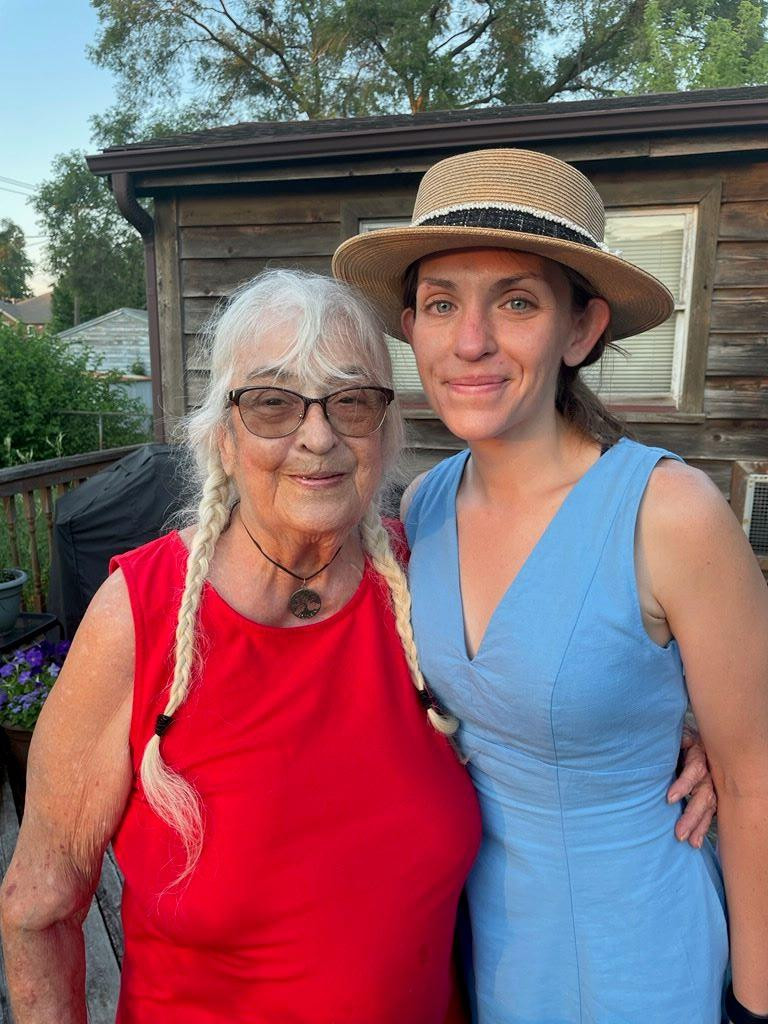
Fighting back tears, Sara Mattillion cracks a big smile as she describes her late mother, Mercedes Woodworth, who died in October 2025, after a lengthy battle with cancer.
“My mom was a firecracker,” says Mattillion, a registered dietitian at OSF HealthCare Saint Anthony Medical Center in Rockford, Illinois. “She was definitely very spunky and quirky, full of life, love and energy for everyone.”
The 75-year-old Woodworth spent a year in OSF Hospice until she died October 17 of this year. She was living alone at her home in Burbank, Illinois, following the sudden death of her husband, Gary, in January 2025.
“It was one of the most awful things I've experienced in my lifetime,” Mattillion says. “But we felt supported by hospice. Everybody that surrounded my mom was also surrounding my brother and I. Taking care of somebody who's dying, and you know they're dying, is hard. It's emotionally taxing, mentally and physically.”
Mattillion and her brother Andrew made frequent trips back to the Chicago area to care for their mother, but the care from the hospice team at OSF HealthCare Little Company of Mary Medical Center in Evergreen Park, Illinois, proved invaluable.
“We’re there throughout the entire time,” says Barb Johnson, an OSF Hospice manager. “I always say that we walk beside the family and the patient, we don't go in and take over. We provide a lot of education, not only on what the disease is, but how that family member is going to take care of their loved one."
A care team, which includes a physician, nurse, social worker, chaplain and volunteers, also focuses on the emotional aspect of dying. Volunteers can help by sitting with patients or assisting with errands or chores around the home. Most importantly, they provide support for caregivers and loved ones.
Hospice is a program that focuses on the entire being of the patient, meaning physical, emotional, environment, as well as their family,” adds Johnson. “We provide as much attention to the family as we do the patient. Because the family is the one that is really taking care of the patient, and we're asking these people to do things that other people have gone to school for. To administer medication and to help them go to the restroom and change their clothes. For many of our families, this is a brand-new area that they're encountering.”
Mattillion says she and Andrew appreciated the clinical and emotional support from hospice. It gave them “peace of mind” during the difficult days. She adds that her mother, too, was overwhelmed by the care and compassion she received for nearly a year.
“She said that she didn’t know what she did to deserve so many angels around her,” Mattillion says. “She really appreciated everyone who was visiting her. How personable they were, and just how real everyone was being with her. She was able to connect with each person that came into the house.”
A month before Woodworth died, she and her family gained some closure thanks to participating in AARP’s Wish of a Lifetime®, a program that fulfills the dreams of older adults, often due to financial or health situations. Woodworth’s lifelong wish was to visit the Grand Canyon, which she did with her two adult children.
For four days, Woodworth and her children soaked in the beauty of the Grand Canyon – laughing, sharing stories, eyeing the majestic sunsets and gazing at the dancing stars.
“My mom said that it gave her a sense of peace and a renewal of energy that she needed to keep going for the time that she did,” Mattillion says. “It was fantastic.”
While hospice won’t change the eventual outcome, the true benefit of hospice is the support the patient and loved ones need during those crucial last days, weeks or months.
“It takes an emotional and physical toll on people to care for someone,” says Johnson. “What we always tell family members is most important is that they take care of themselves first. Because if they don't take care of themselves, they're not going to be able to take care of their loved one.”
November is National Hospice and Palliative Care Month. For more information on hospice, visit the OSF HealthCare website.