
First Foods: Allergen Introduction 101
Key takeaways:
- Introduce solid foods, including allergens, between the four to six month period
- Look for milestones before introducing solid foods
- Early introduction of allergens lessens the chance your baby will have allergies to these foods
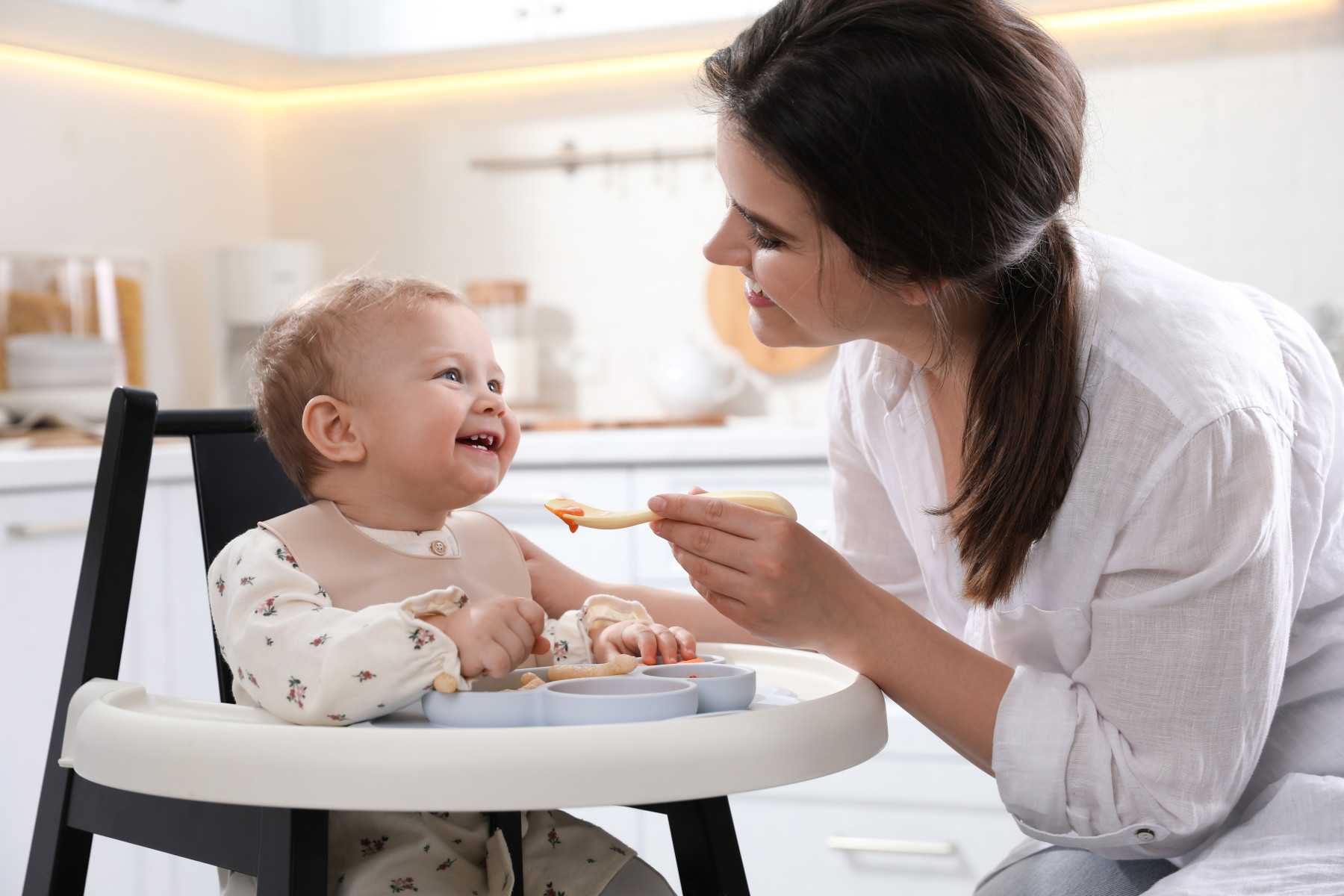
You’re finally getting into a rhythm with your newborn baby.
Their sleep schedule is becoming more “normal,” and they’re hitting some of their very first milestones, but guess what? It’s time to introduce them to solid foods.
With a new adventure, comes fear about things like allergens. According to the United States Department of Agriculture, “The Big 9” of food allergies are milk, eggs, fish, shellfish, tree nuts, peanuts, wheat, soybeans and sesame.
This long list may seem daunting to new parents, but Michael Endris, MD, a pediatrician with OSF HealthCare, offers some tips to help guide you through the journey. He says it’s not necessary to sit outside the emergency room (ER) when introducing an allergen for the first time.
"If kids don't have any other food allergies or risk factors to food allergies like family history or eczema, which can place kids at a higher risk of having food allergies, we don't need to worry about eating those foods outside the ER just in case anything bad happens,” Dr. Endris says.
Four to six-month window
"We know that the earlier introduction of those high allergen foods is beneficial and protective against developing those food allergies. Every child is going to be a little bit different. But usually in that four to six-month range is when they are ready to introduce those foods. There are a few steps that we're looking at before we're talking about introducing that,” Dr. Endris says.
Milestones to hit before eating solids
“First, kids should be old enough to sit up in a chair without completely slouching over. That's a good marker that they're strong enough to get that food where it needs to go. We want to make sure they are interested in it,” Dr. Endris says. "Infants have a reflex where if you load a spoon up with food and try to put it in their mouth, their tongue will push it out. Usually, that reflex goes away around 4 months or so. If we notice the baby is uncoordinated or not accepting the food, then we want to try again in a week and see if that reflex is gone."
The Centers for Disease Control & Prevention (CDC) recommends parents work on their children developing fine motor skills during this time.
- Pinching or picking up food with their fingers
- Develop chewing skills
- Learn to accept and enjoy a variety of foods
Acceptable textures for food include being smooth (strained or pureed), mashed or lumpy, finely chopped or ground. Start with mashed foods first, then transition to finely chopped or ground.
Baby-led weaning
Instead of relying strictly on purees and baby cereal, some parents choose to go the baby-led weaning (BLW) route. This allows parents to offer solid foods to babies to let them feed themselves. The food offered supplements the baby’s diet, while breast milk or infant formula remains the main foundation.
"Baby-led weaning is a great way to incorporate a diverse diet. We want to make sure that as a part of that, there's some of those high allergen foods involved. It's also a great way for babies to work on those fine motor skills of being able to pick those foods up and feed themselves,” Dr. Endris says.
However, it’s important to cut foods properly before serving your child. Fruits, vegetables and cooked meats can be cut into “finger-sized” slices that your baby is able to hold. Avoid round foods like whole berries and grapes. Make sure to cut the blueberries in half and then mash them before feeding your baby.
Also avoid hard or crunchy foods like popcorn, nuts or tortilla chips that can be a choking hazard.
The National Institutes of Health (NIH) recommends only feeding your infant when he or she is healthy; do not offer the feeding if they have a cold, vomiting, diarrhea or other illness. Give the first feeding at home in a safe environment, not at a day care facility or restaurant.
The caregiver feeding the infant should be completely focused on the baby, without any distractions, and spend at least 2 hours with the infant after the feeding to watch for any signs of an allergic reaction.
When feeding peanut butter, the NIH recommends mixing 2 teaspoons of peanut butter with 2-3 teaspoons of hot water. Stir until the peanut butter is dissolved, thinned and well-blended. Allow the peanut recipe to cool and then feed.
What if my child has an allergic reaction?
"If a child is having anaphylaxis, which is not only hives or a rash, but they are vomiting, wheezing or acting really sleepy. If your "mom alarm" is going off and you think something is wrong with your child, then we want to make sure we're calling EMS or going to the emergency department to address that,” Dr. Endris says.
If you have any fear or anxiety this may happen with your child, Dr. Endris says there are safe environments inside the pediatrician’s office you can pursue.
"We can offer testing to see if your child is at an increased likelihood of having those significant reactions. If so, we can do a food challenge in the office with an allergist to make sure we are there in case anything unfortunate does arise,” Dr. Endris says.
If your child has a rash around the mouth, their eczema is flaring up, or they have diarrhea in the coming days, Dr. Endris recommends giving your child’s pediatrician a call to discuss the symptoms.
Hitting the one-year mark
Hopefully by one year old, your baby has developed strong motor skills for eating and is enjoying a wide variety of foods.
However, it is widely recommended to not allow babies to eat honey before they reach one year old. Honey can cause botulism, a type of food poisoning, for kids under the age of one.
On the other hand, once your baby reaches one year old, you can start offering whole milk (Vitamin D milk) to your child. It is recommended to discuss this switch with your pediatrician beforehand.
"We want to make sure those kids are staying on breast milk or infant formula until they're a year old. We want to avoid introducing any cow's milk until they are of that age. They can have cow's milk products like cheese or yogurt before then, but we want to make sure their primary nutrition comes from the infant formula or breast milk,” Dr. Endris says.
Once your child hits the 1-year mark, breast milk or formula is still a viable option to keeping infants’ diets nutritious. But soon after, you can begin to wean the child off breast milk or formula and allow whole milk to take its place.
The CDC says you can move your baby to low-fat (1%) or fat-free dairy milk once they are 2 years old.
When can my baby have water?
After six months, offering small amounts of water to your baby is OK. But before six months, babies drinking water can actually lead to diarrhea and malnutrition. Limit the amount of water your baby drinks at a time to 2-3 ounces, and only offer it if the baby’s hunger has been satisfied by breast milk or formula.
Study released about early introduction of allergens
Dr. Endris and his team at OSF St. Joseph Medical Center in Bloomington, Illinois were a site that participated in a study to bring forth the early introduction of allergens.
The Intervention to Reduce Early Peanut Allergy in Children (iREACH) study was launched by the Center for Food Allergy and Asthma Research (CFAAR) at Northwestern University Feinberg School of Medicine & Robert H. Lurie’s Children’s Hospital of Chicago.
Through the guidelines recommended in the study, the investigators hoped to find a way to prevent peanut allergy and reduce the amount of people who are allergic to peanuts.