
Brain aneurysm survivor says symptoms ‘need to be added to the conversation’
September is Brain Aneurysm Awareness Month
Key Takeaways:
- A sudden “thunderclap” headache, especially with vision changes, nausea, neck pain or confusion, can signal a ruptured brain aneurysm and requires emergency care.
- People with a family history of brain aneurysms should talk with their doctor about screening and their risk.
- OSF neurologist Dr. Thomas Russell says having a brain aneurysm does not have to be a death sentence. Screening and several treatment options are available.
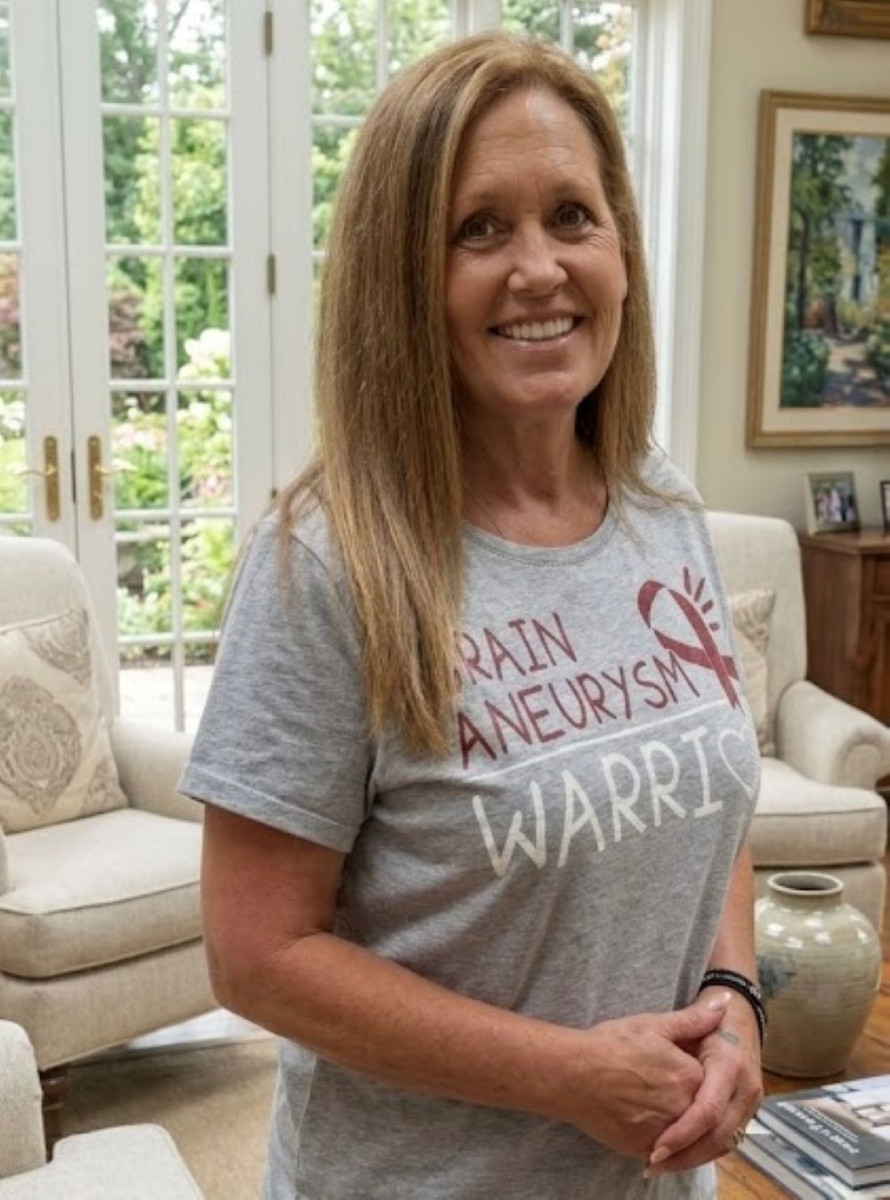
For one brain aneurysm survivor, a routine Monday morning walk with her dogs turned into a fight for her life.
Fifty-five-year-old Kari Rixstine of Bloomington, Illinois, had said goodbye to her husband, Tim, as he left for work and decided to take the dogs for a walk. They had gone only about a half block when one of the dogs suddenly lunged after something.
Then came a pain she had never experienced before.
Rixstine had a shooting pain in her right temple and actually thought she had gotten shot. The pain was so severe it nearly brought her to her knees. Almost immediately, she lost vision in her right eye. She managed to get the dogs home but struggled to text her husband for help.
By the time an ambulance arrived, she was experiencing severe pain in her neck and profuse vomiting. She knew something was seriously wrong.
At the hospital, however, her symptoms were initially attributed to a migraine. Her husband pushed for further evaluation, telling the medical team about her symptoms and her family history. Both her mother and an aunt had died after ruptured brain aneurysms.
A CT scan ultimately revealed blood from the rupture, leading doctors to discover the aneurysm.
A surgeon placed an external ventricular drain to relieve pressure in Rixstine’ s brain before treating the aneurysm with endovascular coiling. The woman spent about two weeks in intensive care while physicians monitored her for complications, including vasospasm.
Recovery was emotionally challenging
Her physical recovery was relatively strong, but the experience left lasting emotional and cognitive effects.
“It was like I was terrified to even leave the house. When I was alone out there and it ruptured, I worked so hard to get home. And then once I was released from the hospital after begging to go home, I didn’t know what to do. I didn’t know how to live.”
Thomas Russell, MD, an OSF HealthCare neurosurgeon specializing in neuroendovascular surgery, says while many aneurysms never rupture, a rupture can cause a life-threatening brain bleed and requires immediate medical attention.
The challenge is that the symptoms of a ruptured aneurysm can sometimes overlap with more common conditions such as a migraine. He encourages people, especially those with a family history of aneurysms, to advocate for a CT scan to rule out aneurysm.
Also, Dr. Russell says it’s important to know the signs of a bulging aneurysm.
“Sometimes it can be something as simple as a droopy eyelid. Your pupil gets really dilated because sometimes these aneurysms can enlarge and press on the cranial nerve. When they press on those nerves, they can cause some symptoms. But it’s kind of silent because they didn’t actually rupture.”
During this Brain Aneurysm Awareness Month, Dr. Russell also wants people to know stress doesn’t cause an aneurysm.
“People think that if you got really stressed or really angry that it can cause an aneurysm. Or lifting heavy weights. That doesn’t cause an aneurysm. But if you have one, that can cause a predilection for rupture and that’s usually the concern,” he shares.
Dr. Russell also wants people to know a brain aneurysm isn’t a death sentence.
“We actually have a bunch of different ways to treat aneurysm. So, if you have a strong family history and there’s some concern about aneurysms and brain bleeds in the family, then talk to your doctor about it because there are screening tests we can do. And there are treatments we can also perform.”
Dr. Russell emphasizes there are certain conditions which make someone at higher risk of a brain aneurysm rupture. Risk factors:
- Smoking
- Heavy alcohol and drug use
- High blood pressure
- Certain inherited conditions, such as brain arteriovenous malformation (AVM), polycystic kidney disease and Ehlers-Danlos syndrome
The worst headache of her life
After staying in the house for two months immediately after she was released from the hospital, Rixstine began resuming life as normally as possible to show her children she wasn’t giving up.
“And I wanted to be an example for them of overcoming. Going through it and overcoming and recovering from it. So knowing they were watchi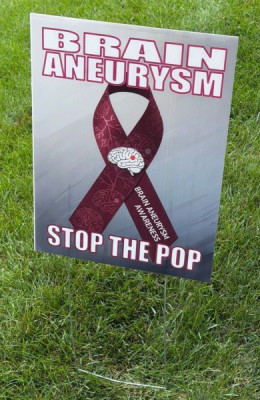 ng me gave me the strength to get through the bad days,” she says, choking back tears.
Rixstine continues to deal with fatigue, vision problems, occasional headaches and short-term memory difficulties. Crowds, bright lights and loud environments can also be overwhelming. Outings to see her husband play in his band are no longer possible. And she no longer works and drives only in optimal conditions. Post-it notes help her deal with memory issues.
In sharing her story, Rixstine wants people to recognize that a hemorrhagic stroke caused by a ruptured aneurysm can look different from the more familiar warning signs associated with an ischemic stroke.
“They call it a ‘thunderclap’ headache. [It’s] the worst headache of your life. That’s what you need to look for. There are vision issues and nausea. When mine ruptured – pain in my neck. I was totally confused, instantly,” Rixstine explains.
Other signs and symptoms include:
- Stiff neck
- Sensitivity to light
- One or both pupils being dilated
- Seizures or sudden loss of consciousness
- Confusion, disorientation or difficulty concentrating
- Weakness or numbness on one side of the body
Rixstine suggests that anyone experiencing these symptoms seek emergency medical attention.
Stroke support group offers community
Support from her husband, children and other survivors has played an important role. She attends a stroke support group through OSF HealthCare St. Joseph Medical Center in Bloomington.
While not exactly what she endured, the experience and recovery can be similar. However, surprisingly to Rixstine, her condition isn’t as widely talked about or understood.
“And it has been incredible for me knowing people who have been through most that [which is] ischemic stroke not hemorrhagic stroke like what I had. I don’t understand how ischemic stroke is so well known and they push it and push it and push it. But the hemorrhagic stroke with a brain bleed, nobody has information on that.”
Ristine’s experience has taught her that signs and symptoms for brain aneurysm rupture should be, as she put it, “part of the conversation.” Her advocacy drove her to create 100 yard signs she’s distributing in the community. And she and husband Tim paid for two billboards that are on major roadways in Bloomington-Normal.
Additionally, Rixstine changed the way she thinks about her family's health.
She now has another aneurysm (this time unruptured) that doctors are monitoring. Her adult children have been screened because of the family's history. And so far, neither her daughters nor her grandchild have shown indications of an aneurysm. She is grateful every day for that.
For more information, visit the Brain Aneurysm Foundation website.