Don’t fear prostate exam screenings
September is Prostate Cancer Awareness Month. Good news for men: the more invasive screening technique has fallen by the wayside, says one OSF doctor.
Key takeaways:
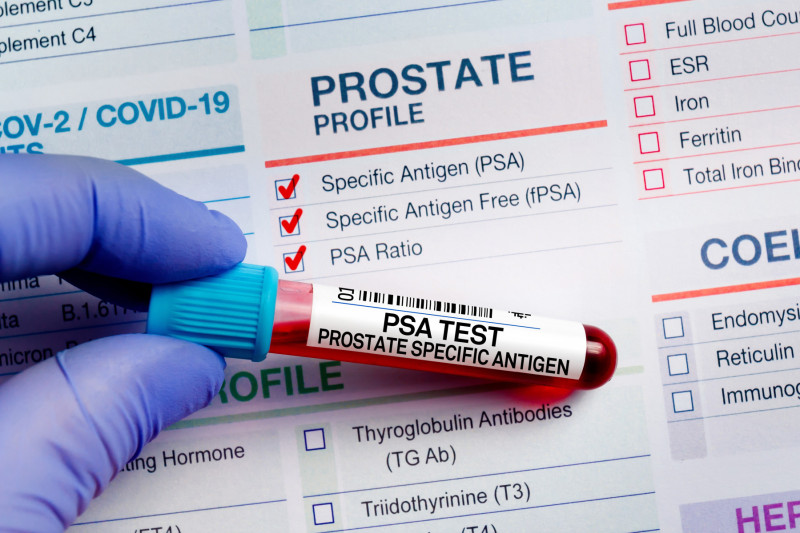
- Men should not fear prostate cancer screenings. The typical screening is a blood test that can be part of routine lab work.
- Other noninvasive tests, like an MRI of the prostate, might also be needed.
- Men should start talking to their primary care provider about screening at age 40. Tell your provider if you have a family history of prostate issues.
John Rinker, MD, an internal medicine physician at OSF HealthCare, has a message for men: prostate cancer screenings are important, and you shouldn’t put them off over “fear of the finger.” In other words, fear that the exam will be uncomfortable. Dr. Rinker says technology and guidelines have evolved so that doctors can get a clear picture of what’s going on in a noninvasive way.
The prostate: A recap
Dr. Rinker says the prostate is an organ that helps produce and protect sperm.
“It continues to grow over time in most men. Different parts of the prostate can start to have abnormal growths. The big concern is that prostate cancer can form. About one in eight men have a lifetime risk of developing prostate cancer,” Dr. Rinker explains. He adds that prostate cancer is the second-leading cause of cancer death in men.
Genetics, family history, old age, ethnicity, smoking and obesity put you at a higher risk. And Dr. Rinker adds that prostate cancer largely comes with no symptoms, making screenings all the more important. If you do have symptoms, those can mimic traits of an enlarged prostate, such as difficulty urinating, blood in semen or pain around the groin.
Screenings
Dr. Rinker says men should start talking to their primary care provider about prostate cancer screening at age 40. He says the method that most men know – a digital rectal exam – has actually fallen out of favor with medical professionals.
“We really didn’t find that the digital rectal exam was very effective,” Dr. Rinker opines. “There’s a lot of user bias with how well [a provider] is at examining. Maybe they won’t be able to detect a larger, late state lesion as well.”
Instead, the standard is a prostate-specific antigen (PSA) blood test. This measures the level of a protein produced by the prostate in your blood.
“It can be added to your routine bloodwork. Nothing more than that. It could save your life,” Dr. Rinker says.
If the test finds elevated PSA levels, a provider might recommend a prostate MRI (magnetic resonance imaging). As the name suggests, this is noninvasive imaging that gives providers a clear picture of the organ.
“This can lead to a reduction in biopsies that are unnecessary,” Dr. Rinker says.
The bottom line
Dr. Rinker repeats advice that men have heard plenty: know your body, know your family history, choose healthy behaviors and see your provider regularly.
“The whole goal of [educating people on screenings] is catching cancer earlier. If you do that, you have more treatment options. You have a better chance to cure the cancer,” Dr. Rinker says. “In some cases if it’s a low-grade cancer, you may choose to not to treat it at all. We can monitor it. We can re-image it or utilize a PSA test to see if it changes.”
Learn more
Read more about cancer treatment and prevention on the OSF HealthCare website. Cancer care at OSF includes services at local cancer centers and clinics like the one Dr. Rinker works at, plus the OSF Cancer Institute in Peoria, Illinois.