
Hospice volunteer brings music and comfort at end of life
Key Takeaways:
- Hospice volunteer Darla Glover uses singing and sometimes simple silence to ease patients’ final moments.
- Hospice volunteers receive training and support and come from all backgrounds.
- Empathy is a strength in hospice work that also support caregivers and families.
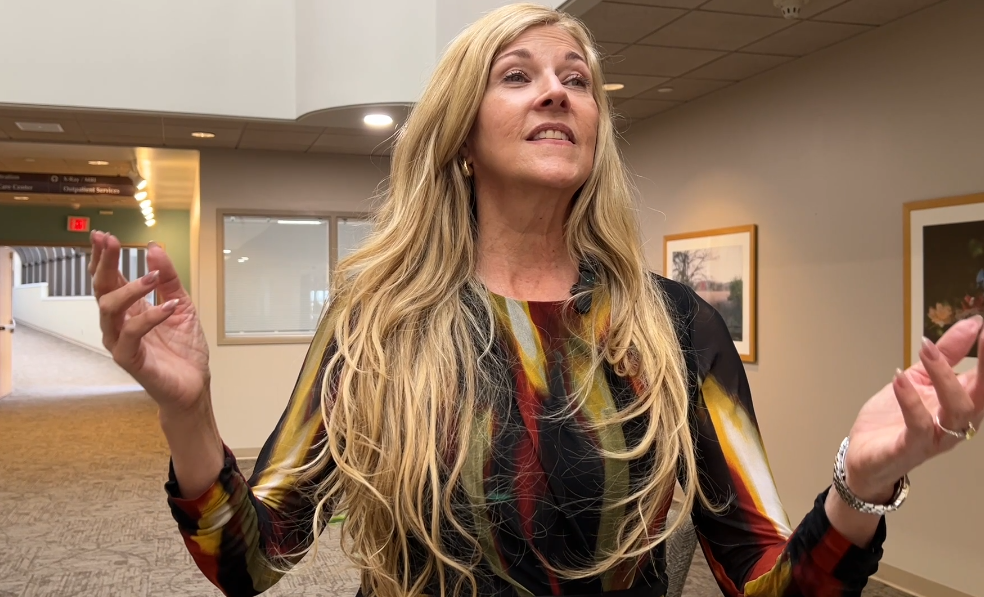
When Darla Glover walks into a hospice room, she never knows exactly what she will be asked to give. Sometimes it’s music. Sometimes it’s silence. Often, it’s simply her presence.
Glover is a hospice volunteer with OSF HealthCare in Bloomington, Illinois where she sings for patients at the end of life. Classically trained as an opera singer, she began hospice work after a deeply personal experience that showed her the power of music in moments of transition.
A woman who she had sang for at a nursing facility was in the hospital and Glover visited her. The woman was dying but Glover continued to sing “Over the Rainbow” as the patient exited the physical world.
“Right when it ended her son said, ‘Darla look!’ And I looked down and she had a smile on her face. The singing had actually calmed the labored breathing. She was even squeezing my hand and her son’s hand and there was a tear coming out of her eye and she passed over right when that song ended," Glover recalls.
That experience led her to pursue formal hospice training and volunteer work at OSF HealthCare. According to Mary Cox, hospice volunteer coordinator at OSF in Bloomington, Illinois, that training is essential. It involves explaining hospice care, some of the main diseases their patients might have, and how to communicate with patients and their families.
Cox works closely with volunteers, recruiting them, meeting monthly with them and matching them with patients based on need. She is currently looking for hospice volunteers who are veterans because she’ has had some specific requests.
Volunteers come from a wide range of backgrounds. A lot are retirees, but some are still working.
“Some have background in health care and that maybe they've retired and wanted to, you know, give back so they hospice volunteer,” Cox explains. “But we also have volunteers that have never had experience in health care, and that is fine. It's just maybe they had a calling, or they maybe had a loved one on hospice and then decided that they wanted to give back.”
Responding to needs
For Cox, the role of a hospice volunteer is less about tasks and more about responding to what a patient or family needs in the moment.
Glover says singing can provide a much-needed lift, but it’s not always what’s needed.
“There are many times I’ll have patients – again ones that I know for a long time or ones, not long – and I’ll sing. But then sometimes they just want someone to sit there, to hold their hand. They want to talk and then sometimes they don’t want to talk, they just want that presence of knowing they’re not alone.”
Glover also reads aloud or sometimes plays soft music. Cox shares that hospice volunteers also provide support to caregivers.
“This also allows time, especially if the patient is at home, it allows time for the caregiver to have time for themselves. Whether they need to leave the home to go to their own appointment or run errands or they just want time away from the house, that allows time for caregivers to take a little breather and get things done that they need to.”
Volunteering spreads love
Glover emphasizes that hearing is often the last sense to fade so she makes sure patients who wear hearing aids have them in when she’s there. Even if they aren’t verbal, she believes patients are listening and it matters. People ask her if the work depresses her. Glover says it’s the opposite. She leaves feeling so fulfilled and grateful.
“This work I’m doing; this is what gives me purpose and meaning to my life. I really believe the foundation is love. As Jesus said, ‘Love one another.’”
Cox says families often hesitate at first to accept volunteer help, but many later wish they had started sooner.
For volunteers, the work can be emotional, but Cox says support is always available.
“I’ll come and sit with them and talk. They also know that if they ever needed to, they could talk to our bereavement coordinator, or social worker or even one of our chaplains because I want them to express. I don’t want them to hold onto any of that sadness or worry of that patient and their family.”
Glover says despite witnessing death, the work has brought her peace rather than sadness. She credits her faith and training for helping her navigate grief — including her own. She recently lost a brother suddenly, but her background helped her cope.
And her work as a hospice volunteer has put a whole different light on death. Glover says she now sees it as a beautiful transition, not something dark. She encourages others who are empathetic and like people to consider becoming a hospice volunteer.
“You might say ‘I’m too emotional,’ or ‘I’m too sensitive.’ Well, actually that’s an advantage because I am. I now look at that as a very good trait whereas in the past I used to think it was not. But it is and so just try it.”
Learn more about becoming a hospice volunteer at OSF HealthCare.