
Relief that goes down easily
Minimally invasive throat treatment helps ease difficulty in swallowing
Key Takeaways:
- Upper endoscopy can be done for those having trouble to swallow
- Trouble swallowing can be caused by GERD, acid reflux or allergies
- Speak to your primary care provider immediately if you're having these issues
- Your primary care provider can refer you to a gastroenterologist for further treatment if needed
- Upper endoscopy allows patients to get back to normal life as soon as they leave the hospital
If you struggle to swallow certain foods due to acid reflux or allergies, you’re not alone.
According to the National Institute of Diabetes and Digestive and Kidney Diseases, 20% of people in the United States have gastroesophageal reflux, commonly referred to as GERD. One of the complications of GERD is esophageal stricture, when a person’s esophagus becomes too narrow. This can lead to major problems with swallowing.
There’s a minimally invasive procedure available that can provide serious relief for patients dealing with these issues. One that can be done in one sitting and have you back to normal life as soon as you leave the hospital.
Introducing upper endoscopy
"This procedure is an upper endoscopy. We frequently refer to it as EGD (esophagogastroduodenoscopy). There are various treatments we can do with this procedure, including balloon dilation," says Raza Hamdani, MD, attending gastroenterologist at OSF HealthCare St. Mary Medical Center in Galesburg, Illinois. "Balloon dilation is one of the techniques we have for patients who have obstruction of the esophagus."
Common complaints that lead to EGD:
The main complaint seen when patients get referred for an EGD is difficulty swallowing certain food like bread or meat. However, depending on the severity, it can even be soft foods or liquids causing issues while being consumed.
“It's usually described as a sensation of choking or things slowing down," Dr. Hamdani says. "Things not being able to go through”
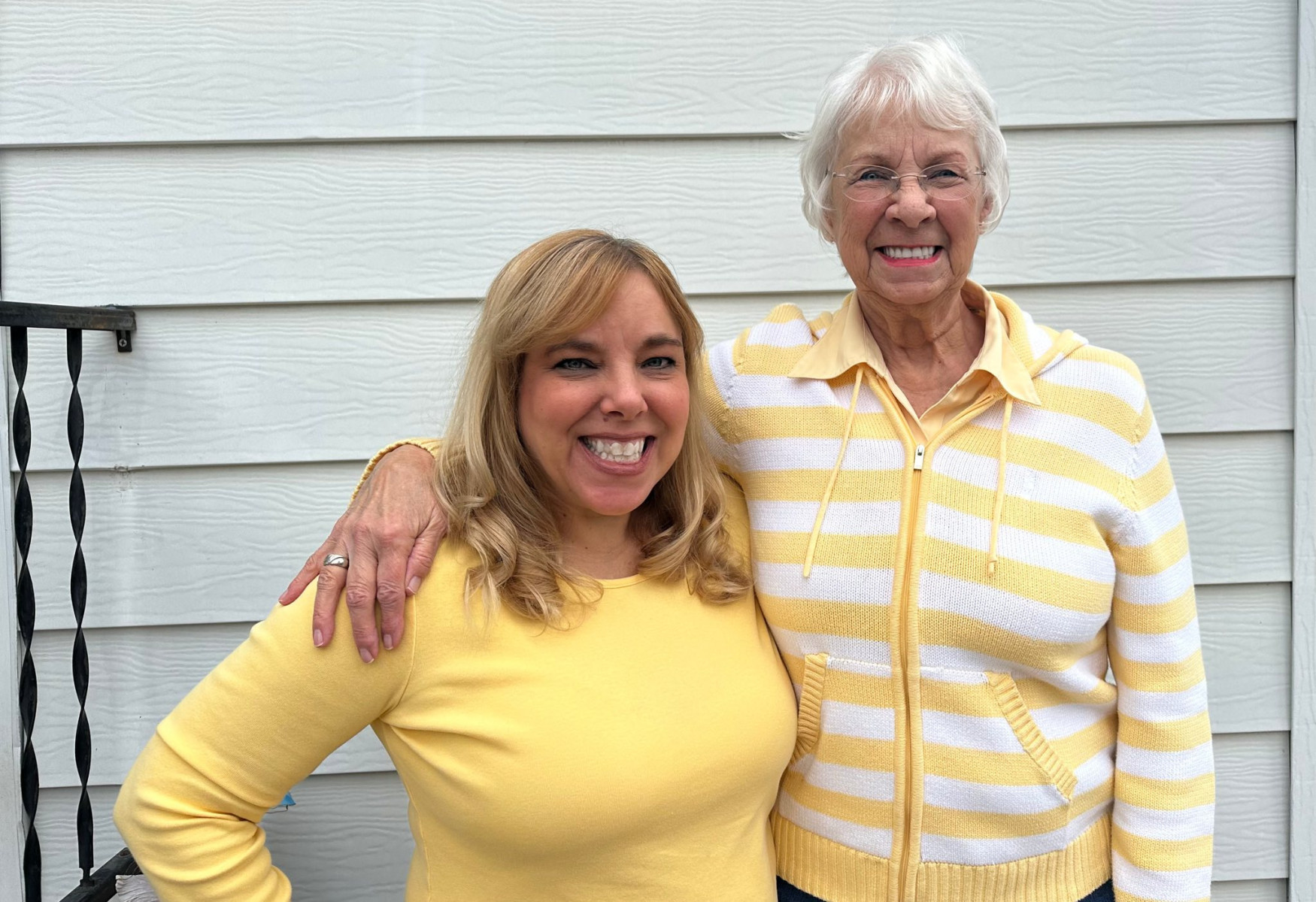
Carrie McCance, the public relations communications coordinator (PRCC) at OSF St. Mary, usually is creating content about the work OSF providers do. This time, she has become part of the story.
“I was having frequent issues with food getting stuck in my esophagus, so much so that I couldn’t even swallow bread. After undergoing an X-ray, I was diagnosed with dysphagia, which is the medical term for difficulty swallowing,” McCance says.
McCance spoke with her care team at OSF and underwent an X-ray to try and get answers. The X-ray revealed she had scar tissue in her esophagus created by acid reflux, creating an esophageal ring that narrowed her esophagus.
“A normal esophagus measures about 20 millimeters in diameter, but mine had narrowed to 12 millimeters,” McCance says.
How the upper endoscopy works
McCance decided to get the upper endoscopy procedure, performed by Dr. Hamdani. Done under sedation, a thin, flexible tube called an endoscope gently passes through the patient’s throat.
A dilating balloon that has been inserted through the scope is carefully inflated, stretching the esophagus back to its normal size.
“This definitely improved my swallowing,” McCance explains.
Her treatment became a family affair, after Carrie’s mother, Mary Guenther, who had been experiencing similar issues, saw McCance go through the process.
“I was happy she told me about this. After I saw her go through the procedure without issues, it was easier for me to go through the process,” Guenther says.
Guenther’s esophagus was even narrower than McCance’s, at eight millimeters. Guenther says she went directly from the hospital and out to breakfast, and her swallowing has been better ever since.
McCance says having this procedure available in Galesburg saved her from hours of travel time, which she is very grateful for.
“I was in and out of the hospital within just a few hours. It couldn’t have been more convenient. Originally, I was expecting to travel to Peoria for the procedure, but thanks to Dr. Hamdani coming to the area, I was able to receive care close to home,” McCance says. “It also meant a lot to have the same option available for my mother. Being able to take her in for her procedure and have her back home in less time than would take just to drive to and from a larger city made a big difference for the both of us.”
What puts people at risk:
For those with trouble swallowing, it normally starts off with a slight feeling and then progresses to a “strong sensation,” Dr. Hamdani points out. This looks like food items are not passing through the throat or even getting stuck. This can even send some patients to the emergency department.
"If you cannot control the acid sensation or burning. Or even if you can, but you've had that kind of sensation for several years, that puts you at some risk for developing scar tissue and obstructions," Dr. Hamdani adds.
Dr. Hamdani encourages patients to "take action" if they are experiencing these complications, just like McCance did.
“Having this procedure truly changed my life. I can now eat without the constant fear of food getting stuck in my esophagus,” McCance adds.
Dr. Hamdani and McCance agree, saying first speak with your primary care provider. They can start by prescribing medications that can help relieve symptoms. If these symptoms don't go away completely, then you should get further consultation with a gastroenterologist to prevent issues from becoming more serious.
Acid reflux isn’t the only challenge these patients can face. Allergies can also affect the esophagus, creating the need for an EGD procedure.
For more information on gastroenterology specialists in the Greater Galesburg region, visit the OSF HealthCare website.