
Don’t let appendicitis burst your bubble
Key takeaways:
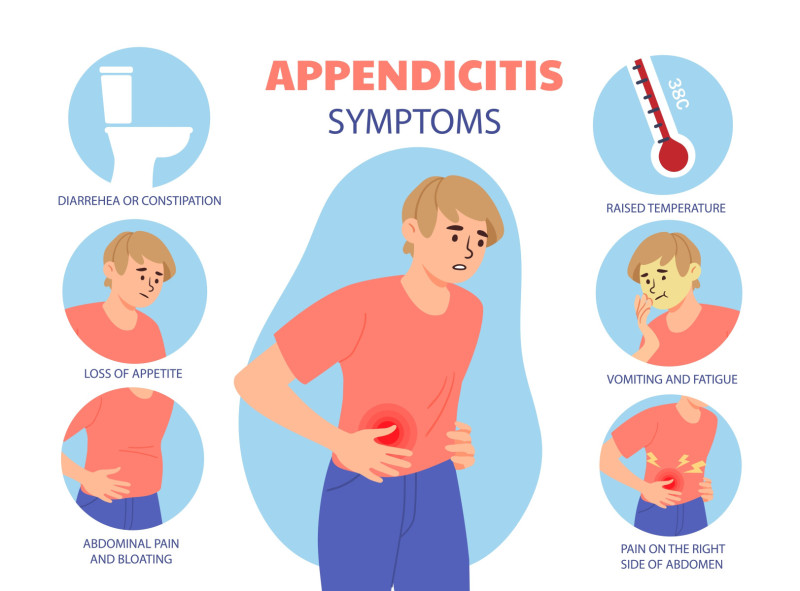
- If you have abdominal pain, vomiting, fever, fatigue, diarrhea or loss of appetite, you might be suffering from appendicitis.
- There are different ways to treat appendicitis, but it usually ends with minimally invasive surgery to remove the appendix.
- Other than good daily habits, there's not much you can do to prevent appendicitis. But if you have symptoms, get help right away. Untreated appendicitis can lead to sepsis.
Do health care providers know the exact purpose of the appendix? No.
Should you still know the signs when the organ rebels? Absolutely, says Amanda Maddox, APRN, a family nurse practitioner in surgery at OSF HealthCare. That’s because complications from appendix issues can be life-threatening.
Symptoms and treatment
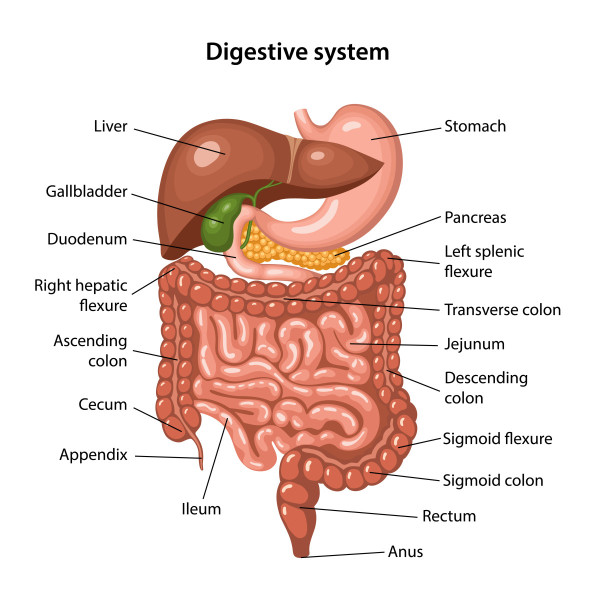
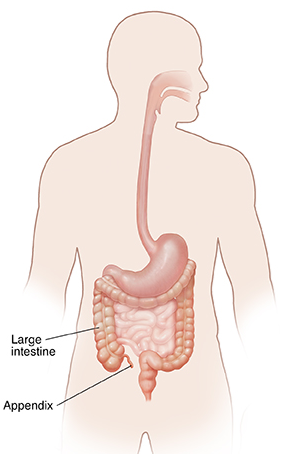
Maddox explains that the appendix is a small, finger-shaped appendage that sits near the large intestine in the right lower area of your abdomen. If you suddenly have pain around your belly button that moves to the lower right abdomen, nausea, vomiting, fever, fatigue, diarrhea, constipation or loss of appetite, you might be suffering from appendicitis.
“It’s an obstruction within the base of the appendix. That could be from a hard fecal mass, inflammation or an infection,” Maddox says.
Appendicitis impacts men more than women, and it’s often seen in ages 10 to 30. That’s why it’s important to listen to kids who complain about pain in their midsection. Don’t shrug it off as a stomach bug, Maddox says. Get them to the emergency department right away. Untreated appendicitis can lead to sepsis, a possibly deadly condition where your body responds improperly to an infection.


Maddox says in more severe cases of appendicitis, inflammation can lead to tissue death, fluid buildup and a perforation. This is commonly called a burst appendix. Maddox says providers, to start, could drain the fluid and put the person on antibiotic medication. But she says the likely endgame is appendix removal. Like the gallbladder, the appendix is an organ we can live without.
“For appendectomy surgery, the gold standard is laparoscopic,” Maddox says. In other words, it’s minimally invasive.
“It’s small incisions around your abdomen. We go in with the laparoscope and other instruments under direct visualization. We remove the appendix and send it off to the lab,” to get a full picture of what was wrong, Maddox says. For example, in some cases providers will find a tumor, leading to more tests and treatment to make sure all the cancer is gone.
“If there are complications, bleeding or if it’s a difficult appendix to remove, we do have to an open appendectomy. That would require an incision on the right lower quadrant of your abdomen,” she adds.
The person could go home the same day, or they could spend the night in the hospital so providers can monitor their pain and ability to eat and drink. After two to three weeks of rest and recovery, the person could return to full activities.
Prevention?
Do you need to worry about your appendix all the time? No, says Maddox. There’s not much to do to prevent problems with the organ other than good daily habits.
“Have a healthy diet high in fiber and water. Have regular bowel movements. That can all help,” prevent fecal masses, Maddox says. A stool softener isn’t necessary, she adds.
Interview clips
Related stories
Back to the stone age
Varicose veins: Not just a cosmetic problem
Hoarse whisperers: Unmasking the vocal sabotage of silent reflux
Sending reflux back where it belongs
Rethinking breast cancer surgery
Hernia vs. sports hernia: Know the difference
Lisa Marie Presley and small bowel obstruction
‘Sepsis does not discriminate’