
From hospital to home: A 24/7 lifeline for patients after discharge
Key Takeaways:
- A post-hospital discharge program from OSF OnCall offers 24/7 digital connection to support people who might have questions, concerns, or who want to a report worsening condition.
- The OSF OnCall Post Hospital Discharge program also provides help with resources such as help getting prescriptions or transportation to follow up appointments.
- The support effort that began in May of 2021 has reduced hospital readmissions to 7% compared to 12.8% for people who are not in the program.
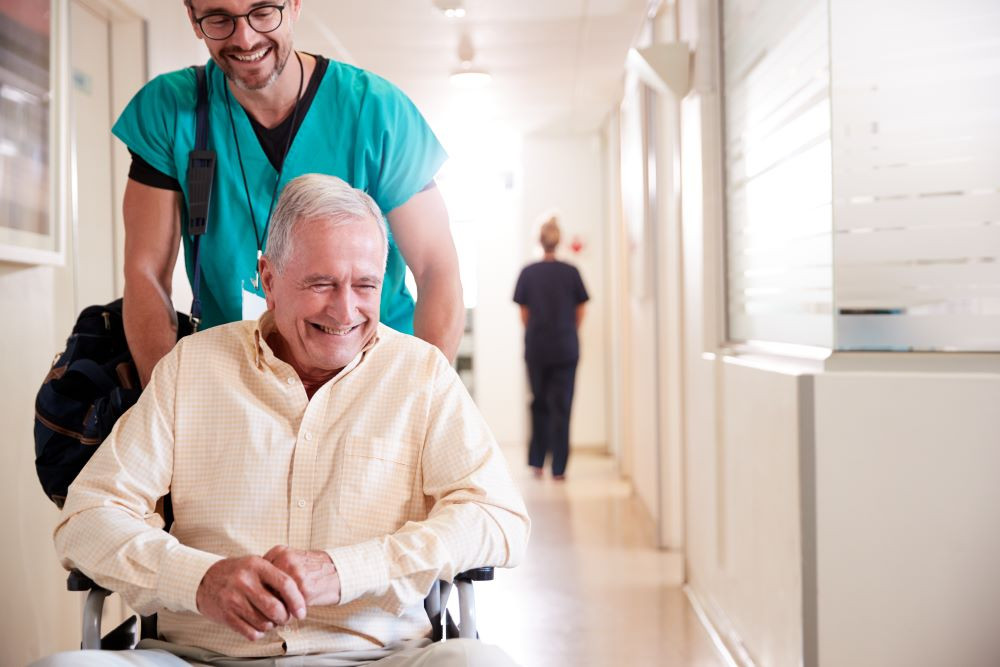
Being discharged from the hospital can be a scary time. It can include dealing with a new diagnosis, waiting for tests results or adapting to taking a new medication. A 2022 study found that nearly 25% of patients experience adverse events within 14 weeks of discharge, nearly half of which could have been prevented.
That reality prompted OSF HealthCare to innovate to improve the transition back to home and to prevent people from having to return to the hospital. Rose Smith, RN, manager of Digital Care, OSF OnCall, says the Post Hospital Discharge program invites people who have been discharged from the hospital to download the GetWell Anywhere APP to get 24/7 access to their care team. If people don’t want to use the app, they can choose to receive a text or communicate through the GetWell Anywhere website.
Smith says individuals receive daily check-in messages and education.
“It’s just asking, ‘Do you have your appointments? Do you have transportation? Do you have your meds? How is your condition?’ And then from there our team of nurses and medical assistants will read those responses; reach out to the patient if needed and then also if they have a change in condition, we have advanced practice providers who can do a video visit to see if we can keep these patients home instead of going back to the hospital.”
The program requires no special equipment. If those who are newly discharged want to track blood pressure, they can use a vitals log. Low risk patients are in the program for 12 days. Any patient who is considered to be medium to high risk for complications or hospital readmission is enrolled for 30 days. Smith says enrollment can be extended, or it can end early, depending on individual circumstances.
For people who have received a new diagnosis, Smith says the Post Hospital Discharge program can offer easy access to answers.
“This just really gives them the opportunity to send us those questions. If they want to talk to a provider, maybe they’re unsure if their medications changed, this gives them an opportunity to have 24-hour access to a nurse, to a provider if maybe something comes up – that we can keep them from needing to go back to the hospital.”
Sometimes, follow-up appointments after getting out of the hospital don’t happen for two weeks or longer so Smith says having an instant connection before that appointment can be important.
“Do they need extra support? Are they trying to contact someone? Do they not know who to contact? Maybe they have new specialists. Maybe they’re waiting for the referral to go through. So really looking at how we can give them support in between those appointments.”
OSF HealthCare is trying to lower its hospital 30-day readmission rate across the Ministry, which is currently 12.8%. That compares to 7% for those enrolled in the Post Hospital Discharge program that began in May of 2021. It began supporting all people leaving the hospital at medium to high risk for readmission. The project expanded three months later to include people who are enrolled in home care after a hospital visit.
The digital connection is now also available to low-risk patients leaving all OSF hospitals except the most recently acquired OSF HealthCare Saint Katharine Medical Center in Dixon, Illinois. The hospital is not yet on the Epic electronic medical records system used at all other OSF Hospitals.
To date, nearly 15,400 people have activated an account to stay connected – just under 30% of people invited. Leaders emphasize the post-hospital support program also helps individuals who have trouble getting to their follow-up appointment. Smith says one of the biggest needs is transportation and OSF OnCall digital health navigators are helping connect people to what they need.
“We have our digital health navigator team who anytime a patient says they’re needing help at home – they might need help getting equipment, picking it up, picking up prescriptions, getting transportation – then we’re able to escalate that to those team members and they’re able to help find resources.”
Anyone with questions about the program or who needs help getting started with the GetWell Anywhere connection can call (833) 673-5867.